Behind The Sea of Sameness
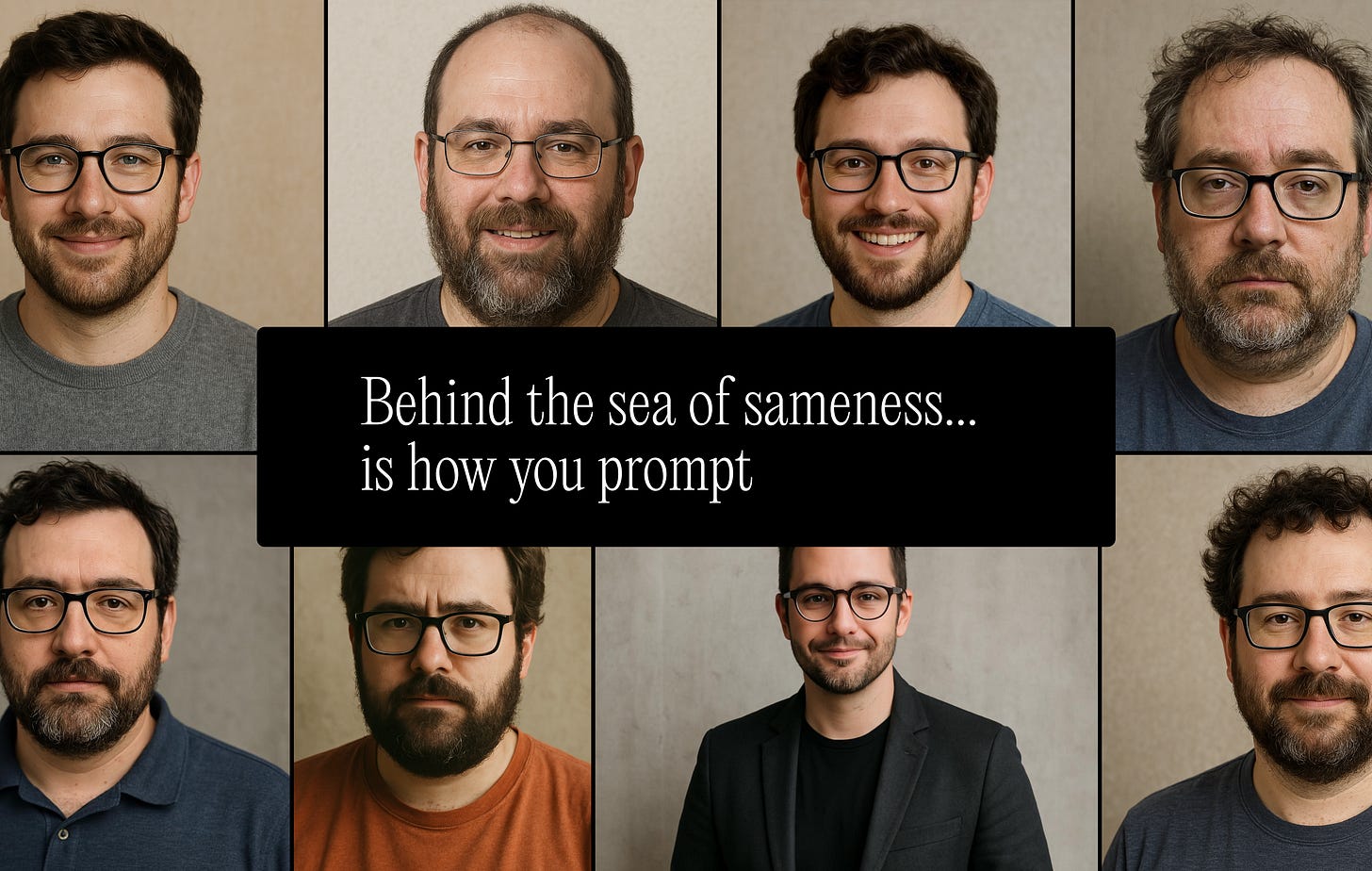
This week, I was fascinated with the viral trend on LinkedIn.
The idea is simple, type in one simple prompt:
”Based on what you know about me, generate an image of what you think I look like.”
The images that are coming back… they look nothing like those who prompted the AI.
It’s a soft-smiling, slightly-bearded, thoughtful white tech guy.
“Who do you sound like?” That’s what the AI was really answering.
Not What you actually look like.
But:
Who writes like this?
Who uses these words, this tone, this cadence?
The model doesn’t see you.
It sees everyone who’s sounded like that before.
So why is it a middle-aged white dude?!
1. The Prompt Used Was Generic
Most of the viral prompts were something like:
“Based on how I write, what do you think I look like?”
(No photos, no bios — just text.)
Even if everyone asked the same question, the AI didn’t return wildly different images.
It returned the same guy — over and over.
Why?
Because the writing samples it was evaluating — whether Substack posts, LinkedIn updates, or blog intros — often shared a common tone:
Thoughtful but punchy.
A little vulnerable (“Here’s what I learned from failing…”).
Uplifting and growth-oriented (“We’re all just iterating toward better”).
Generously curious (“I’d love to hear your thoughts!”).
And almost always: approachable but polished.
…it doesn’t just hear your voice.
It hears everyone who’s written like that before.
So it says: “Oh, this sounds like a thoughtful startup founder with a Medium blog and a Notion doc full of frameworks. Got it.”
And then it gives you him.
The Insight: A generic prompt plus a familiar tone doesn’t reveal who you are — it reveals who you sound like. And when everyone sounds the same, the system defaults to the most recognizable pattern.
2. AI Based Pattern Defaults
AI image generators are pattern-matchers. When they read a prompt that sounds like “tech, thoughtful, articulate, professional, a little clever,” they pull from their massive training data — blogs, talks, LinkedIn, tech bios — and say:
"Ah, I’ve seen this voice a thousand times. It usually belongs to a guy like this."
This guy becomes the default. Not out of malice, but because the dominant dataset sounds like him and looks like him.
3. Unfortunate Cultural Coding
Even beyond AI, we’ve trained ourselves to associate this type with:
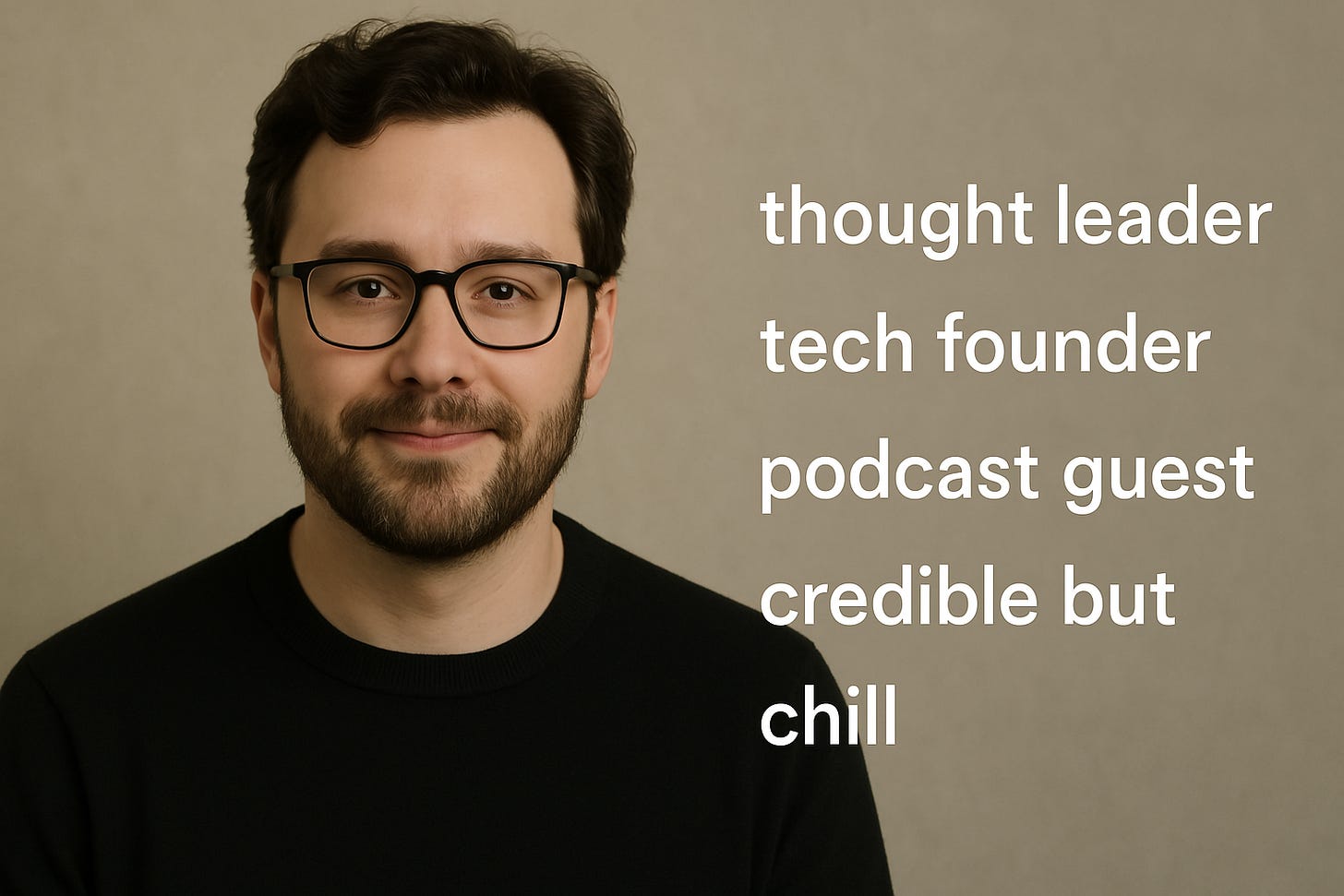
“thought leader”
“tech founder”
“podcast guest”
“credible but chill”
It’s the Midwest-NPR-meets-SF-startup aesthetic. Clean, smart, kind of safe.
We’ve seen this archetype succeed so many times, the aesthetic becomes shorthand for authority and relatability. That makes it hard to escape.
The issue: The prompt everyone used is similar, and that society thinks this type voice is the style of a white male, tech guy.
4. AI Is Guessing Based on Its Training Data
The model is guessing based on everyone else who’s sounded like you (in this case, “Based on how I write, what do you think I look like?” sounds like a white male, based only on it’s training data.
The Insight: If you give a generic prompt, the system can’t see you. It will fill in the blanks based on “standards”.
5. If You Want to be Seen… Prompt Differently
The reality is that the models pull in from what society has given it, sameness. It’s the patterns we reproduce when we write like we’re all cut from the same cloth. The same prompt, gives us the same man.
So try a different prompt with details about yourself:
1. What you do (with texture):"I’m a [role] in [industry], but what I actually do is [add flavor: how you move, lead, think].”
2. How you come across:"I give off [3 adjectives that describe your presence or vibe]. Think [cultural or visual reference — e.g., Rihanna-meets-boardroom, or 'like a strategist who DJs on weekends']."
3. Physical details (optional, but helpful): "Picture someone with [describe visible attributes — e.g., warm skin tone, highlighted hair, hoop earrings, confident posture, glowing smile, sharp eyes].”
4. Final tone instruction: "Make them look like they could [punchy detail — e.g., close a deal and crash a yacht party in the same day, or write a pitch deck while doing their lip gloss].”
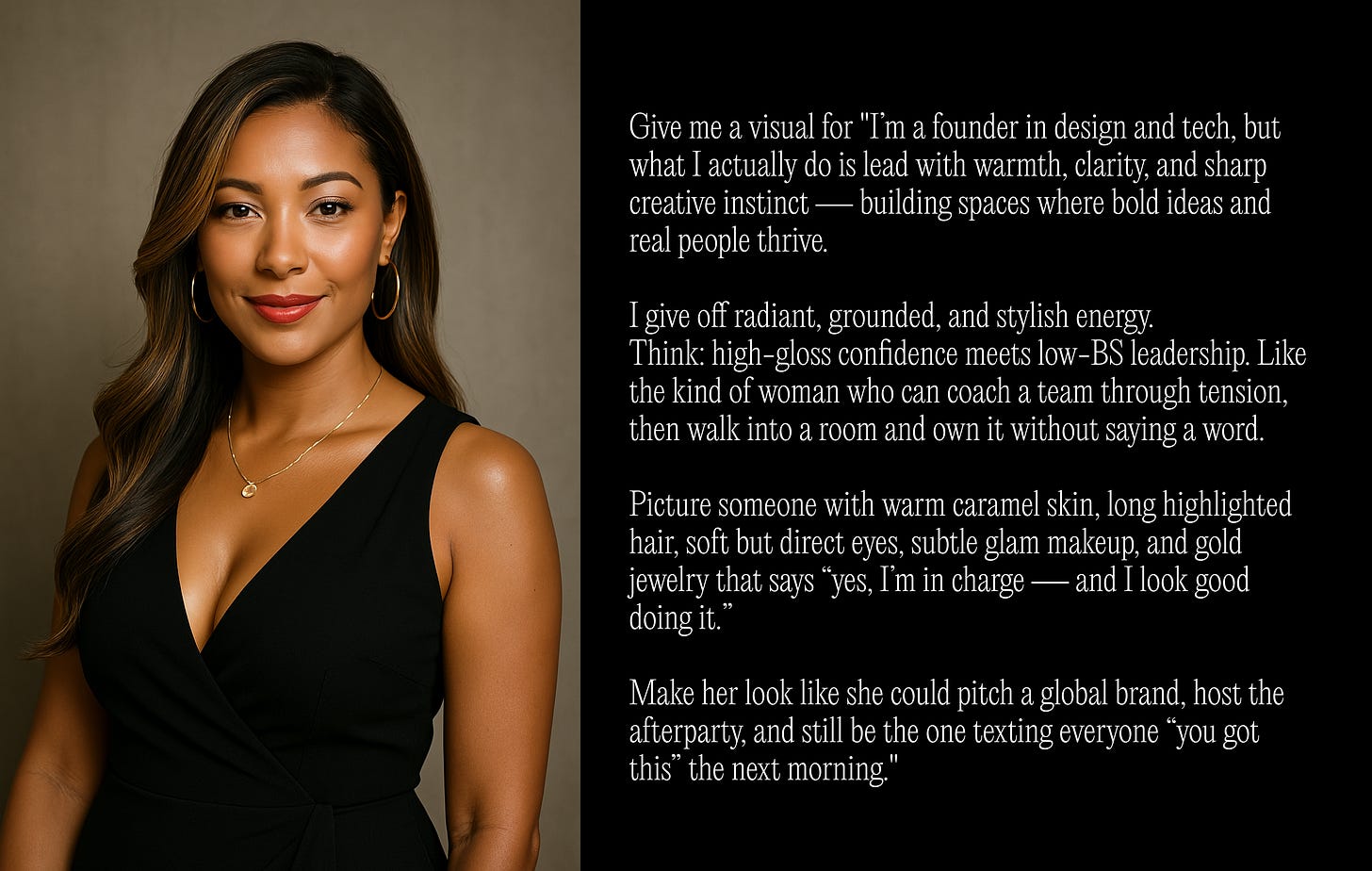
The Insight: Don’t give AI the power to “just fill in the blanks”. It will fill them in with the “standard”. You’re not standard, unless you prompt like you are
From a sea of sameness to a mirror worth standing in front of.
At BABCO, we design like we prompt—with specificity, clarity, and care. Whether it’s branding a new startup or building systems for scale, we craft experiences that reflect the richness of the people behind them.
Because sameness is easy. But distinction?
That’s where the magic is.
Ready to be different, get more stories from BABCO...